On reproducing 144 Hairstyle References in the work Portraits at a Window by Theetat Thunkijjanukij
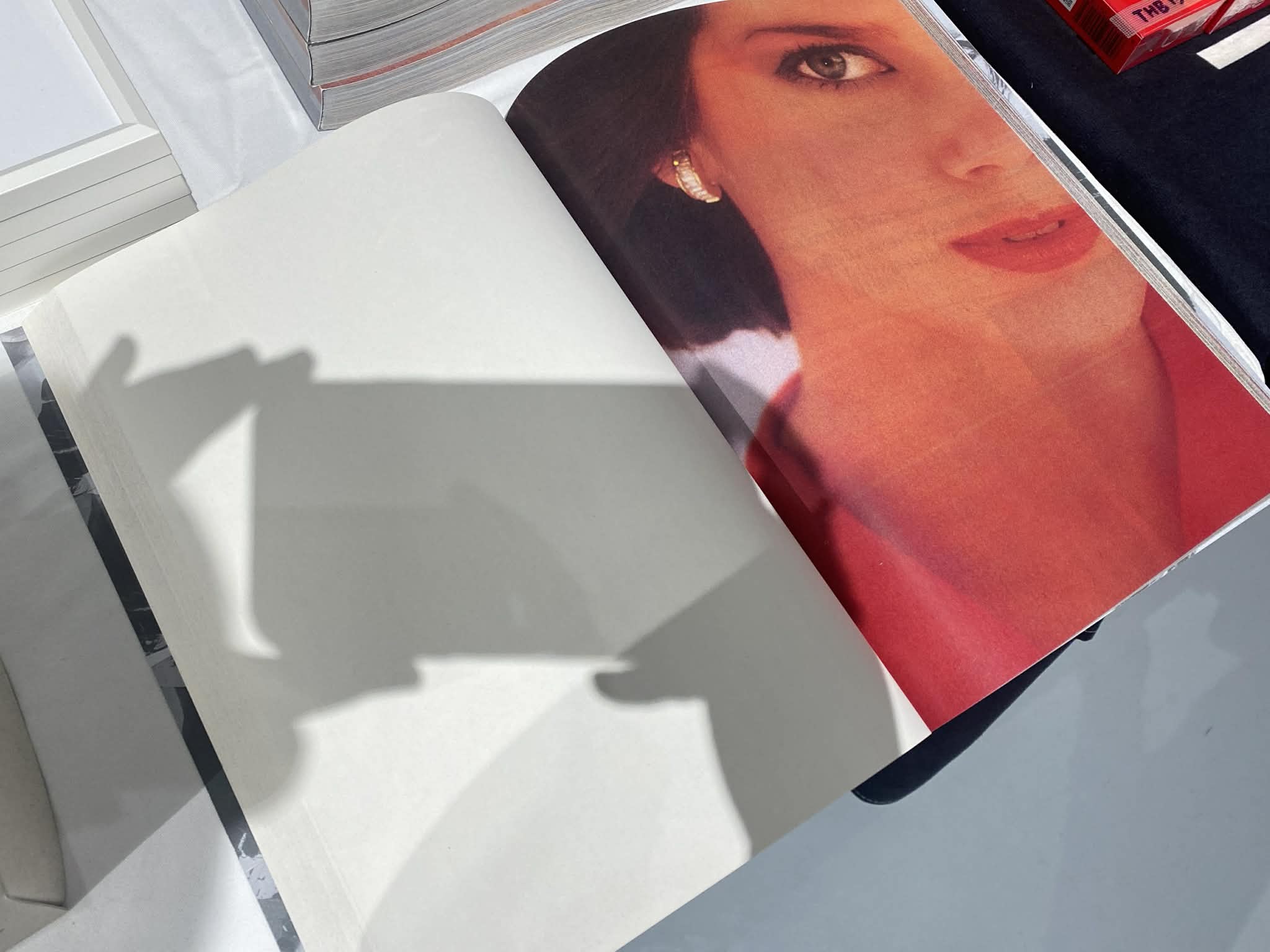
For BKKABF 2025, we plan to work with people who have a playful vision and approach. And Theetat is that person. What we like about him is the way he depicts images and objects in his work. It was a tardigrade, หมีน้ำ, that he used in his publication for Bibliomania (2018).
Theetat has a background in graphic design, even though he might position himself differently—more as someone who can jump across boundaries: between art and design, between cities and countries (he is now based in Amsterdam).
What we have seen from this recent work is his contemplation on copying and reproduction. We had a chance to see one of his works earlier this year: the copies of a past edition of a Thai dictionary. The books were placed high on a shelf, with no context and no clues—just reproductions of thousands of words explaining themselves.
When we asked Theetat to join us, it was no surprise that he proposed a book filled with image reproductions. This time, he chose to work with 144 hairstyle reference images that appeared in Thai fashion magazines from the 1960s to the 1990s. More than just copying, he worked through the entire process to complete the book—acting as an editor by selecting and shaping the sequence, as a designer by cropping the images and arranging the layouts, and as a printer by printing and coordinating the binding process.
Theetat answered a few questions we had for him so we could better understand his vision, and so others can get to know what he’s exploring now.
Could you tell us your name, share where you’re based, and tell us about your practice and areas of interest?
Theetat Thunkijjanukij, I run a copy business in Amsterdam.
How have you been lately? What is your current obsession?
I'm very into Souls games at the moment.
Can you tell us about some aspects about our collaborative publication?
Portraits at a Window features 144 portraits that serve as hairstyling references, cut out of obsolete advertorials in Thai fashion magazines from the 1960s to the 2000s.
It is well known that coiffure often attracts the gaze. In the popular imagination, it glitters. It has to hold the fetishist's eyes fixed on the seduction of belief, guarding against the encroachment of knowledge. See the early lights that captured on those heads of stars. Shaken out of the mag, any indexical trace of the producer or the production process is wiped out, in a strange reenactment of the failure of the workers' power to stamp itself on its products as value. This may be a second blip for the absolute pristine newness and the never-touched-by-hand glint, to shower that hair again.
Could you share a bit about your approach as an artist/designer?
I like to work on replicas of niche books and prints. My work explores economies of scale and the meanings that emerge through reproduction and the erasure of the original. Using limited machines and materials, I emphasize meticulous reproduction within constraints. I position my work in subcultural, low-end markets, featuring intentional inaccuracies that result from my copying techniques. I am now building a conceptual shop as a publishing practice, in which selling replica books becomes a way of making public.
What drives you or still keeps you in your practice?
Curiosity and possibilities of working with emerging peers.